Showing posts with label work-life balance. Show all posts

Friday, June 11, 2021

Let’s Talk about Complex Chronic Illness and Academia

By Kai Chan

Yesterday, a subset of my lab group (<10 people) had a gathering on the beach for the first time since COVID began. I wasn’t among them.


The normal way to interpret this is to assume that I don’t care that much about them, that I don’t really enjoy being around them.


Nothing could be further from the truth. I love these people. They’re brilliant, generous, creative, inspiring people that I’ve gone out of my way to surround myself with. I cherish the time I get to spend with them.


So, why did I miss the gathering? Because my wife had a really bad week.


Sounds lame, doesn’t it? The words wither in my mouth as I spoke them, by way of a quick explanation for my absence.


This blog post is the longer explanation, the one I realized I had to give. It explains a whole bunch of events I’ve skipped, tasks I have begged off, deadlines I’ve missed.


Let’s try that sentence again: (because) the woman I love and the mother of my children is suffering. Chronically, and last week was especially bad. For years I made it worse by pushing her when she had nothing more to give. No more.


The suffering is hard to understand from the outside. And for those who suffer, the feeling of shame that folks just don’t get it—even close friends and family—just adds to the misery.
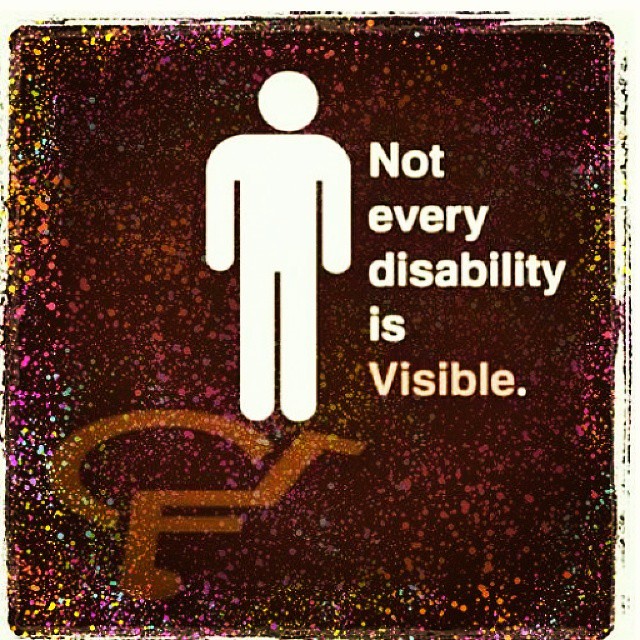
chaya.goldberger, Flickr


The family of conditions are called “complex chronic syndromes”. They include myeloencephalitis/chronic fatigue syndrome, multiple chemical sensitivities (MCS), fibromyalgia (sometimes called chronic pain syndrome). With permission, I’ll share that in my wife’s case it’s quite likely fibromyalgia, perhaps with systemic mold toxicity, explained partly by uncommon genetic predispositions. That’s the medical speak, the jargon.


On a human level, this manifests in an unceasing world of fog, incapacity, and hurt. It’s a body reliving past traumas—physical and otherwise—in an endless self-reinforcing cycle. It’s somewhat like having a flu and never shaking it. You still feel off, listless, achy, painfully tired, and out-of-it mentally. People think the pain is the worst of it, but that’s not my wife’s experience. The mental fog is the worst, and the anxious buzz. The pain seems most troublesome because of how it undermines sleep, which seems absolutely crucial for coping and any chance of recovery.


It’s so bad that many chronic sufferers can’t do most of what they used to do. My wife can’t work any longer. She can barely get up to function for appointments that start at 11:30am. One appointment is about all that she can manage in a day, they tax her so much. It’s hard to imagine recovering at that rate, given how many appointments seem necessary when so many things are off.


The biggest blow is almost certainly to one’s sense of self as a capable person. It’s one thing to be sick for a while, and get better. It’s another thing entirely to be so sick that you can’t do most anything, with no clear route to recovery. She will get better—I believe it firmly. But in the meantime, her incapacity gets in her head, dangerously.


And that kind of danger I can’t take lightly.


So life just isn’t the same—for me, either. I always shared child-rearing duties quite equally, and took pleasure in that. But whereas school drop-offs used to be shared, now that plus breakfasts are all mine. Ditto for cooking dinner (after my wife does dinner prep while I work), and bed-time routines—every night. I have 9-5pm on workdays for work; outside that, I’m primary parent >95% of the time.


Travelling used to be a big part of my job, but those days are long gone. When I travelled, I would work like a demon, cranking out 15+ hour days even while also juggling security checks, customs lines, and the rest. That was the only way I could keep up. I haven’t had a ten-plus-hour work day since March 5 2020, when I spent a solid seven hours on a whole-brain task and also cleared out hundreds of emails, including some complex ones. It’s crazy that I miss it.


I don’t need a pity party. My wife is the one who's suffering. (She just wants doctors to stop saying or suggesting that it's all in her head.) I have a few colleagues who are single-parenting, and what I’m going through is not close to that. My wife still does a lot, and she is there to balance out my heavy-handedness and all my other parenting foibles. Plus she’s there for me when I need her.


from Flickr

I used to think that meant that I could travel, and she’d rally. And she did. Before I understood her condition—before either of us did—I thought this was OK. I’d have a work trip on the horizon. As my departure approached, she would grow increasingly anxious about coping without me. Inevitably, she would lash out, and I’d get defensive at the perceived guilt trip. We’d argue for days. When I would return, she’d be sapped, but she would have made it.


“What doesn’t kill you makes you stronger,” they say. I don’t think they suffered from a complex chronic illness.


These trials certainly didn’t seem to be making my wife stronger. The knowledge that she had made it through before was no comfort next time around. If anything, the anxiety was worse.


I’m done making it all worse. I don’t want to see how far she can be pushed. I want to make space for her to get better.

—

This post deepens my understanding of achieving balance in academia, which I reflected on in the following three posts from 2015:

Creative Commons Licence
CHANS Lab Views by Kai Chan's lab is licensed under a Creative Commons Attribution-ShareAlike 4.0 International License.
Based on a work at https://chanslabviews.blogspot.com.

Thursday, January 28, 2021

Should I stay, or should I go? Mental health, retention, and crossroads (Part 1 of 2)

By Jo Fitzgibbons, PhD Student

I almost quit my PhD last week.

It’s probably the thousandth time I’ve considered leaving my PhD. I’ve been insecure in the decision to pursue doctoral studies since even before applying. Frankly, I will think about it a thousand more times before I finish - or don’t. And although most people don’t talk openly about this inner conflict until they actually pull the plug, I know from conversations with my peers that I am not the only one toiling about this decision, right now. 

How did I get to this point, I wonder? I have enjoyed many privileges in life that have allowed me to succeed academically, and have been incredibly fortunate to have supportive supervisors and professors over the years who pushed me to be the best scholar I can be. In many ways, an academic career seems like a natural fit - it’s something I’m good at and have been well-supported to do. But academic achievement isn’t a measure of wellbeing, and like many graduate students, I struggle with chronic mental health problems. 

I was already burnt out by the time I started my Master’s, and again, still, when I started my PhD. I’ve become physically ill from stress. Most of the time, I feel that I am driving on flat tires: I doubt that my research makes a difference, yet, the world chugs on around me, seemingly getting progressively more dismal, hateful, and barren with every moment that I spend working toward my degree. Personal family challenges have me constantly looking over my shoulder at the East Coast, wondering if I am in the right place, and if it is time to go home. Now, in 2021, we have been dealing with COVID-19 related lockdowns and social restrictions for nearly a full year. Grad school is already a solitary endeavor, but the pandemic has made it feel brutally lonely. 

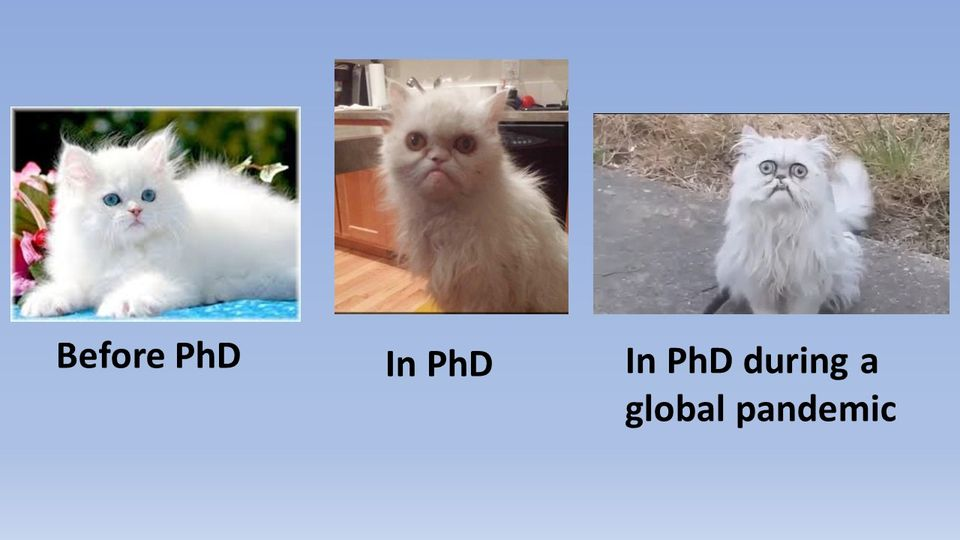
Image source: Melinda Aley, “grad school memes with relatable themes” Facebook group

On the other hand, the limited experiences I have had in practice have felt gratifying. I’m a license-eligible urban planner, and I’ve done internships with governments and worked as a project manager in nonprofits. In these roles, my deliverables (and the uplifting fanfare over their completion) were only ever, at most, about six months out from the current date (instead of… how many years, again?). I could see the impact of my work on real people in real communities, even if the magnitude of it was smaller than the global sustainability issues I explore in my research. Being paid a professional wage for my labour also, obviously, sounds more appealing than watching 60% of my academic “income” get whittled away on the cost of housing and food alone (that's even after splitting the cost of living with another person, and with more generous funding than many students get). And every year that I spend on my PhD is a year that I am not building the essential applied experience needed to get professional accreditation in my field. 

In other words, I feel like there are lots of “push” factors nudging me to leave, and a few “pull” factors urging me to stay. It’s hard to self-help myself out of this rut because sometimes it feels like nobody understands, even though I know, statistically, that most grad students have gone through this. That’s because all the well-intentioned op-eds, self-help apps or online self-guided mental health tools address only one problem at a time, or only talk about factors from one part of my life (school). Sure, impostor syndrome is something that I and many grad students experience, but it is not the only thing keeping me up at night. My life is an ecosystem, full of moving parts and interconnected pieces. Salmon and I have that in common - there is no “smoking gun” causing us to decline, but rather, it is a matter of cumulative impacts from several stressors. 

My situation is not unique - many students struggle with this, and it has been written about on the CHANS Lab Blog before, in 2015. We have learned a few things about graduate mental health and its relationship to retention since then, and with Bell Let’s Talk Day upon us, it felt appropriate to re-ignite the conversation. Let’s Talk Day takes place on January 28th each year, and is the company’s charitable effort to reduce stigma and normalize conversations about mental health. (Note: I share a healthy cynicism with others about this campaign - see here and here - but ultimately still value the space it provides to speak openly about mental health.)

The journal “Nature” published results of an international multi-language survey in 2019 about mental health and life satisfaction of graduate students. While 38% of students indicated that they were “very satisfied” with their decision to pursue a PhD, the (rounded) remaining 63%, a majority of respondents, sat somewhere between “somewhat satisfied” and “very dissatisfied”. 

Furthermore, 36% of respondents indicated that they had “sought help for anxiety and depression caused by their PhD studies”. The study does not report on how many respondents dealt with these issues, but did not "seek help". The findings echo similar research conducted by the World Health Organization examining clinical signs of mental disorder among students. Concerningly, only 26% of the students that sought help “said they got real assistance at their institutions”. Worse still is that many students (18%) do not feel supported when they do seek help, and 10% indicated that no help was available for them at their institution.

The magnitude of these responses indicates that this is not an individual problem - it’s a pervasive, systemic one. A large majority (76%) of survey respondents indicated that they work more than 41 hours per week, and most attribute this to the culture of their university. Combine these excessive working hours with “publish or perish” pressure, rampant impostor syndrome, a lack of suitable mental health supports, an oversaturated job market where a doctoral degree may even reduce your earnings, and people constantly asking you when you’re going to join the “real world”... are we really surprised that so many PhD students do not see their program through to completion?

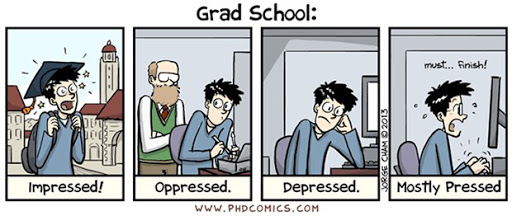
Image source: www.phdcomics.com

Last week, it all came to a head for me. I sat staring at my puffy red face on Zoom, occasionally muting myself to blow my nose, and trying to explain through a tight throat and a broken voice to my supervisor, Kai, why I could not do this anymore. And Kai, bless him, spent our whole monthly meeting trying to understand, telling me he believed in me, offering help, and nudging me to see the forest for the trees. He was kind, and his arguments were reasonable: planning practice offers more instant gratification and feedback for my efforts, but as a scientist, I could achieve a wider sphere of influence, make more of a difference on the issues that really matter to me outside of the planning profession. It’s not that I don’t care about making a difference, I had to explain, but those are tall ambitions for someone with flat tires. There are days when I can hardly even drag myself out of bed, much less think about changing the world. 

This was not his first rodeo, obviously: he has talked students down from the ledge before. I had a chance to hear from one of those students during our departmental coffee social, and have known a few other people in my life who made the difficult decision to leave their PhD. The truth is that most of these people (the ones I know, anyway) have felt satisfied with their decision whether they stayed, or whether they left… after it’s over, of course, and it’s all hindsight, it is easier to be happy with what you’ve done. In the words of the late, great Douglas Adams in “The Long Dark Tea-Time of the Soul” (the title of which is a remarkably good description of how I’m feeling right now): “I may not have gone where I intended to go, but I think I have ended up where I needed to be.” 

For today, at least, I have backed down from the proverbial ledge. It can feel taboo to talk about “dropping out”, but in stigmatizing this conversation, we’re leaving students stranded and confused, worsening stress, and squeezing them out. Your mental health should not be the price you pay for a PhD. So, let’s talk.

In Part 2 of this blog post, we’ll hear from some of those people about how they made it through (or didn’t) and what life has been like on the “other side”. In the meantime, let’s acknowledge the truth about systemic mental health problems in academia, and support each other openly, and navigate the weeds together instead of alone.


Wednesday, November 4, 2020

Watch "The Social Dilemma"—and Talk about It

by Kai Chan, from a Facebook post from September

I just watched The Social Dilemma (on Netflix), and I strongly recommend it to EVERYONE. Anyone who has a social media account, is concerned about political polarization and fake news, and/or has kids, grandkids, or other children in their lives.

This is not a conspiracy theory. There's no allegation that this technology was invented for manipulation (beyond profit making, which is normal). And there's no suggestion that social media is all bad. It's got tremendous upsides, many noted in the film.

The movie offers something much more. It offers a chance to reflect on what's dangerous about social media, and why. Also, what's not so dangerous. It's informed by the perspectives of a dozen prominent social-media execs (Facebook, Pinterest, Twitter, etc.) who have come to worry about the virtual realities they have created.

The solution is not to delete all social media accounts. At this stage, we need these media to organize towards a solution. I think the answer is to take a series of very achievable steps to regain control over our time, our children, and a sane society where we can talk to and relate to our neighbours across political divides.
The Social Dilemma, on Netflix
(promotional poster)

MY PLEDGE: I will ...
1. First use a reputable fact-checking centrist news source (where we can all share the experience of a single reality—e.g., CBC, Globe and Mail), not social media for news (where we can get lost in echo chambers, oblivious to others' perspectives).
2. Turn off notifications—except for direct communication with close friends and family.
3. Fact-check, critically evaluate, and seek to understand the other perspective.
4. Keep my whole family off devices at least 30 minutes before bedtime (no devices in the bedroom).
5. Keep my children off social media until they are at least 16, when they have a solid sense of self-worth and an understanding of genuine friendship and superficial social media 'likes'.

Does this make sense for you? If not, what might you do?

I do this all out of respect for others—because I know that those who have different views are not stupid (although social-media thought bubbles don't help me understand how they aren't).

I do it out of concern for the value of my time—because I know that algorithms can feed me content that will keep me online longer than I would otherwise choose (to the benefit of massive social media platforms and consumerism generally).

And I do it out of love for my family—because I know that children are vulnerable to feelings of loneliness, otherness, FOMO (fear of missing out), superficiality, peer-pressure, harassment and bullying (because they are still forming their identities and their senses of self-worth).

Creative Commons Licence
CHANS Lab Views by Kai Chan's lab is licensed under a Creative Commons Attribution-ShareAlike 4.0 International License.
Based on a work at https://chanslabviews.blogspot.com.
Monday, November 2, 2020

What Grief Taught Me about Conflicts of Interest


By Kai Chan

Two and a half weeks ago, I heard the devastating news that my former student Adrian Semmelink had died in his sleep over Thanksgiving weekend. Connected in unexpected ways, I had just renewed my conflict-of-interest declaration at UBC.
Adrian Semmelink, a great student, person, 
... and friend

Here's how it went. Renewing my declaration, I found to my chagrin that I had made a statement that I really couldn't stand by. In response to the question about close personal relationships at the workplace, including students, I had written that I seek to be friendly with all my students, but I didn't consider them to be close personal relationships according to their examples (partner, child, close personal friend).

Except that the bit about "according to their examples" was only implicit. Even then it didn't sit right. I can't help but feel close to my students, and like they're not just my mentees but also friends (defined as sharing a mutual bond of affection). I certainly feel affection for my students. I can hope they feel the same for me.

I remember struggling with this passage the previous year. I remember not knowing what to do. Did the friendships I had with my students constitute close personal ones?


What are the tests of this? Sometimes I share details about my life that go beyond work, including ones that I might otherwise keep guarded. That seems to indicate a closeness, of a personal nature.

I changed the text to indicate simply that I am friends with all my students, and I can't help but become close.

Turns out another test of 'close personal' is hearing that someone died. (What a lousy test.) That feeling of my heart dropping out of my chest, the rage against the universe, the overwhelming sadness about the truncation of life and its relationships, the lost moments of confusion—including right in the middle of class—when memories of Adrian came flooding to front of mind. "Friendship, but not close or personal"?

And how could we not become close? How could we go to the lengths that we go to as supervisors to make our students lives better, to advance their goals, and their visions for themselves and the world—how could we do that without becoming invested in them? That is, in an affectionate rather than instrumental way?

I remember having senior colleagues tell me on several occasions many years ago that our students are not our friends, and that it's crucial to keep a distance. The logic seemed indisputable at the time: we are occasionally put in positions of having to make students do things they don't want to do; occasionally we even have to fail them.

But the logic falls down. Neither of those tasks precludes friendships. At least not for me. I've pulled rank on students a couple of times, and told them that a task was not negotiable. And although I've never had to fail one of my grad students, I've certainly had to indicate that failure was on the horizon, conditional on big changes. (That student left my mentorship).

All of those experiences felt like crap—they all invoked a strong cognitive dissonance because friends don't act like that to friends. But we deal with cognitive dissonance all the time. In this case, it's straightforward although not simple: we have layered relationships. Sometimes I've got to put the friend hat down and wear the supervisor hat exclusively.

So I disagree with those senior colleagues. I will continue to be friends with my students. Acknowledging, of course, that it might be a whole lot harder for my students to let down their guard with me (knowing that I may have to pull rank on them) than for me to let down my guard with them.

So yes, I do have conflicts of interest involving my students—all of them. Grief has clarified what I should already have known: I'm emotionally invested. I can't imagine it being any other way.

I a. person with whom one has a bond of mutual affection